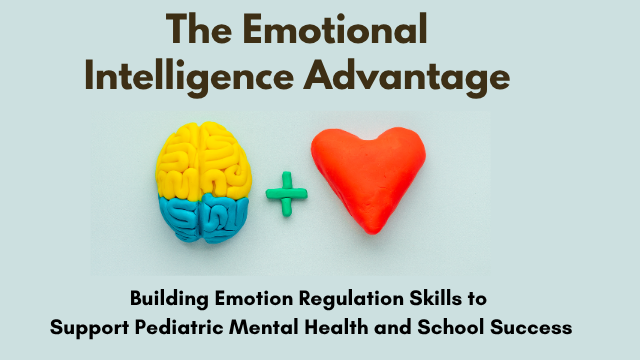

Playful Connections: Boosting Emotional Intelligence Skills Through Play
How do we teach kids about complicated feelings without making it feel like extra work?
And how can we use effective, evidence-based emotion regulation strategies without spending hours reading journal articles and books?
If you’re short on time but still want to make a meaningful difference in a child’s emotional development, you’re in the right place.
You Don't Need to Add More to Your Schedule
Supporting children’s mental health and emotional well-being is incredibly important. But as therapists, educators, and caregivers, finding the right time to teach emotional skills can sometimes feel challenging.
We’re already juggling therapy goals, school demands, family routines, documentation, and everything else that comes with supporting children.
The last thing we need is another activity to squeeze into an already busy day.
So what if you didn’t have to add another activity?
What if you could teach emotional intelligence skills through the play and routines you’re already doing?
You can!
Play provides a natural opportunity to practice empathy, emotional awareness, problem-solving, flexibility, frustration tolerance, and self-regulation—all while keeping the experience fun and engaging.
The key is knowing what to say, when to say it, and how to turn everyday moments into opportunities for emotional learning.
Here are three simple ways to get started.
The key is knowing what to say, when to say, and how to turn everyday moments into opportunities for emotional learning.

3 Tips to Build Emotional Intelligence Skills Into Your Therapy Routines
1.) Reframe "Bad" Behavior
It’s time to look at challenging behavior through a different lens.
When a child refuses, resists, shuts down, or struggles to follow directions, it can be tempting to think of the behavior as simply “non-compliance.”
But what if we paused and asked a different question?
“What is this behavior telling me?”
Instead of viewing resistance as “bad behavior,” consider whether the child may be experiencing a delay or challenge in emotional regulation.
Maybe the activity feels too difficult. Maybe they’re frustrated. Maybe they’re overwhelmed. Maybe they don’t have the skills yet to communicate what they need.
Remember: Behavior is communication.
When we shift our perspective, we can move from simply trying to stop the behavior to figuring out what the child needs and teaching the skills that will help them participate more successfully.
And those skills matter everywhere—at home, at school, in therapy, and in the community.

2.) Modify the Activities You're Already Doing
You don’t need to create an entirely new therapy routine. You don’t need a shelf full of expensive toys. And you definitely don’t need to spend hours preparing a special “emotional intelligence activity.”
Instead, look at the activities you already use and ask:
“How can I turn this moment into an opportunity to practice an emotional skill?”
Playing a board game? That’s an opportunity to practice waiting, flexibility, handling disappointment, and being a good sport.
Doing a craft? That’s a chance to talk about frustration, mistakes, problem-solving, and having a growth mindset.
Playing with Legos? You can practice flexibility when the structure doesn’t turn out exactly as planned.
The activity doesn’t have to change dramatically. Sometimes, all you need to change is the conversation.
This is where Emotion Coaching can become such a powerful tool.
The goal isn't to stop the emotion. The goal is to teach the child what to do with the emotion.
3.) Use Emotion Coaching
Emotion Coaching allows you to weave emotional learning naturally into the activities children are already enjoying.
Imagine you’re playing a game with a child and they suddenly become frustrated because they’re losing.
Instead of immediately saying, “It’s okay. Don’t get upset,” you can use the moment as an opportunity to help them understand what’s happening.
You might say: “I can see you’re getting frustrated. Your game didn’t go the way you hoped.”
Then you can help the child identify the emotion, talk through what happened, model a calm response, and practice a strategy for moving forward.
The goal isn’t to stop the emotion. The goal is to teach the child what to do with the emotion.
And because you’re teaching these skills in the middle of a meaningful activity, the learning feels natural rather than like another lesson they have to complete.
Your words, your modeling, and your interactions can be powerful teaching tools, too.
Keep the Focus on the Joy of Learning
Children learn best when they’re engaged. And what better way to engage a child than through play?
When learning about emotions is fun, silly, creative, and connected to something a child already enjoys, they’re more likely to participate and remember what they’ve learned.
You don’t need a laminated feelings chart or a fancy emotion meter sitting next to you every time you work with a child.
Those tools can be wonderful resources, but they aren’t the only way to teach emotional intelligence.
Your words, your modeling, and your interactions can be powerful teaching tools, too.
A simple comment during a game. A pause when frustration starts to build. A chance to practice taking a deep breath. A conversation about making mistakes. A reminder that it’s okay to feel disappointed.
These small moments can add up to big changes over time.
Turn Everyday Play Into Powerful Learning
Teaching emotional intelligence doesn’t have to be rigid, complicated, or boring.
In fact, some of the most meaningful learning can happen during the moments that don’t feel like learning at all.
Every game, craft, obstacle course, pretend-play activity, or everyday routine can become an opportunity to build emotional intelligence.
You have an amazing opportunity to turn everyday play into powerful moments of connection, emotion coaching, and skill-building.
And the best part? You don’t have to add more to your schedule. You just need to learn how to see the opportunities that are already there.

Ready to level up your EQ Skills?
Would you like to feel more confident weaving emotional intelligence and emotion regulation strategies into the therapy sessions and play activities you’re already doing?
The EQ Advantage can help you get there.
Inside the course, you’ll learn practical emotion coaching strategies and specific tools you can easily incorporate into your everyday work with children.
No complicated routines. No hours of preparation. Just practical strategies you can start using to help children build emotional intelligence skills that will serve them for a lifetime.
Your next great therapy moment might already be hiding inside the next game you play.
Ready to level up your EQ skills?
👉 Check out The EQ Advantage and start turning everyday play into opportunities for emotional growth and connection.