
How to Achieve Happier Handwriting Sessions
Success Beyond Pencil and Paper
If you’re an occupational therapy practitioner, chances are you’ve earned a reputation as the handwriting expert. And for good reason! Handwriting is an area where occupational therapy can make a huge difference, especially in school settings.
But what happens when the challenge isn’t really the handwriting?
Have you ever sat down with a student for a handwriting-focused session and experienced one of these scenarios?
- Refusing to write
- Running away from the table
- Breaking a pencil or crayon
- Throwing the writing utensil on the floor
- Scribbling on the paper or writing something inappropriate
- Acting overly silly and refusing to focus
- Having a tantrum or meltdown
- Erasing over and over because nothing feels “just right”
Sound familiar?
If so, you’re not alone—and the solution may not be another handwriting strategy.

Look Beyond Words on Paper
When a child is refusing to write, melting down, avoiding the activity, or becoming extremely frustrated, there may be an emotion regulation challenge underneath the behavior.
And here’s the important part: you can’t always teach handwriting when a child isn’t emotionally ready to learn.
Before we can expect a student to focus on letter formation, spacing, sizing, or pencil control, they may need help managing the emotions that are getting in the way.
Maybe the writing task feels too difficult. Maybe the student is afraid of making a mistake. Maybe they’re overwhelmed by the sensory demands of the environment. Or perhaps they simply don’t yet have the emotional regulation skills needed to handle frustration.
When we recognize what’s happening beneath the behavior, we can respond differently.
Instead of thinking, “How do I get this child to write?” we can begin asking:
“What does this child need in order to feel safe, regulated, and ready to participate?”
That shift can change everything.
Regulation First, Handwriting Second
It’s worth taking the time to address emotional regulation before jumping back into the handwriting task.
When a child is calm, regulated, and emotionally ready, they’re in a much better position to participate, learn, problem-solve, and work toward their handwriting goals.
This doesn’t mean abandoning handwriting.
It means recognizing that emotional regulation is part of the foundation that makes handwriting possible.
And the same principle applies far beyond handwriting. Whether you’re working on handwriting, fine motor skills, self-care, or activities of daily living, emotional regulation can influence a child’s ability to participate and succeed.
Bring Emotion Coaching Into Your OT Sessions
One way to support these skills is by embedding Emotion Coaching into your therapy sessions.
Emotion Coaching helps children learn to recognize and understand their emotions while developing strategies for responding to those emotions in healthy, productive ways.
This can include:
- Teaching children about their emotions and mindset
- Using supportive, “wise” words during challenging moments
- Practicing emotion regulation strategies
- Modeling healthy responses to frustration
- Using co-regulation to help children feel calm and supported
- Helping children identify what their bodies and emotions are telling them
These skills don’t have to be a separate activity that takes up your entire therapy session.
They can become part of what you’re already doing.
For example, when a student becomes frustrated while writing, you might pause and help them identify the emotion, notice what is happening in their body, choose a regulation strategy, and then return to the writing task when they’re ready.
You’re still addressing handwriting—but you’re also teaching a skill that can help that child far beyond your therapy session.

Mental Health Is Part of Our Work
As occupational therapists, we focus on helping children participate in the activities that matter in their everyday lives.
And emotional regulation is one of the most important life skills a child can develop.
When we help a child regulate their emotions, we aren’t simply helping them have a better handwriting session—or even a better day.
We’re helping them develop skills they can use throughout their lives.
Mental health matters just as much as physical and developmental skills like fine motor coordination, handwriting, and motor planning.
As OTs, we have a unique opportunity to look at the whole child and consider how emotional, sensory, motor, cognitive, and environmental factors all interact.
That holistic perspective is one of our greatest strengths.
Connection Comes Before Correction
More Than a Handwriting Specialist
You already have the clinical skills, creativity, and heart to make a lasting difference in the lives of the children you serve.
Now imagine adding emotional intelligence and emotion regulation strategies to your OT toolbox.
Imagine feeling more confident when a student melts down, refuses to participate, or becomes overwhelmed.
Imagine knowing how to move beyond simply managing the behavior and instead helping the child understand what’s happening and develop skills they can use independently.
You don’t have to be “just” the handwriting specialist. You can be a champion for the whole child—and a leader in pediatric mental health and wellness.
Including emotion regulation skills isn't a detour from therapy. It can serve as a bridge that helps a child to achieve their therapy goals.
Stay True to Holistic Care
True success in pediatric therapy requires us to look at more than what a child can physically do.
We need to consider the whole child.
Their body.
Their brain.
Their emotions.
Their relationships.
Their environment.
Their strengths.
And the skills they still need to develop.
When we make emotional well-being part of our therapeutic approach, we can help children move from simply getting through difficult moments to developing the skills they need to navigate them.
And that’s a skill they can carry with them for life.
Sometimes the path to better handwriting, stronger fine motor skills, greater independence, or improved participation starts with helping a child feel safe enough to try.

Ready to level up your EQ Skills?
You don’t have to figure all of this out on your own.
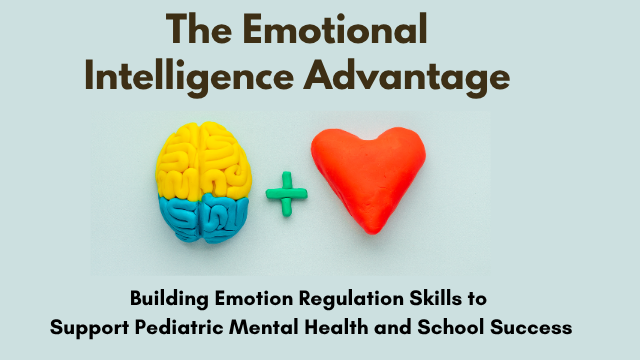
If you’re ready to move beyond simply managing challenging behaviors and learn practical strategies for building emotional intelligence and regulation skills into your work with children, The EQ Advantage Course was created for you.
Inside the course, you’ll learn concrete, evidence-based strategies you can begin using right away to support children’s emotional development, strengthen co-regulation, and bring an emotionally intelligent approach to your therapy sessions.
Because when we help children understand and manage their emotions, we aren’t taking time away from therapy. You can help to create the conditions that make therapy more successful.